

Peak season hits fast. One week your warehouse is manageable, and the next you're staring at a backlog of containers, overflowing pallets, and a fulfillment team stretched thin. For e-commerce brands, importers, and freight brokers in South Florida, temporary warehousing is often the difference between capturing peak-season revenue and losing it to delays and stockouts. This guide walks you through every step: assessing your needs, choosing the right provider, setting up efficient operations, and tracking performance. Follow this framework and you'll be ready before the next surge hits.
Table of Contents
- Assessing your temporary warehousing needs
- Selecting the right service provider
- Setting up efficient operations and workflows
- Monitoring performance and troubleshooting common pitfalls
- Why most brands underestimate the value of flexible warehousing
- How 3PL Prime can support your peak warehousing needs
- Frequently asked questions
Key Takeaways
| Point | Details |
|---|---|
| Start with needs assessment | Understanding your exact space and service requirements prevents costly mistakes. |
| Vet providers carefully | Choose warehousing partners with flexibility, technology, and a proven track record. |
| Integrate operations early | Sync your inventory and workflows quickly to reduce bottlenecks during peak periods. |
| Monitor and adjust | Regularly review performance metrics and resolve issues fast for optimal results. |
Assessing your temporary warehousing needs
Every solid warehousing plan starts with knowing exactly what you need. Skipping this step is one of the most common reasons businesses overpay for space they don't use or scramble for capacity they didn't plan for.
Start by pulling your order volume data from the last two to three peak seasons. Look at inbound shipment frequency, average pallet counts, and how long inventory typically sat before moving out. This gives you a baseline. From there, layer in your current forecasts. Are you expecting a 20% volume increase? A 50% spike? The numbers drive everything.
Next, identify which specific services you need beyond basic storage. Common requirements include:
- Cross-docking: Moving freight from inbound to outbound trucks with minimal storage time
- Container devanning: Unloading and sorting ocean or air freight containers
- Pick-and-pack: Fulfilling individual orders from bulk inventory
- Secure yard storage: For oversized freight or trailer drops
Location matters just as much as services. If you're importing through PortMiami or Miami International Airport, proximity to those terminals cuts drayage costs significantly. A facility with direct highway access also reduces transit time to your final delivery points. Temporary warehousing is crucial for handling e-commerce and import surges, and the right location can make or break your turnaround times.
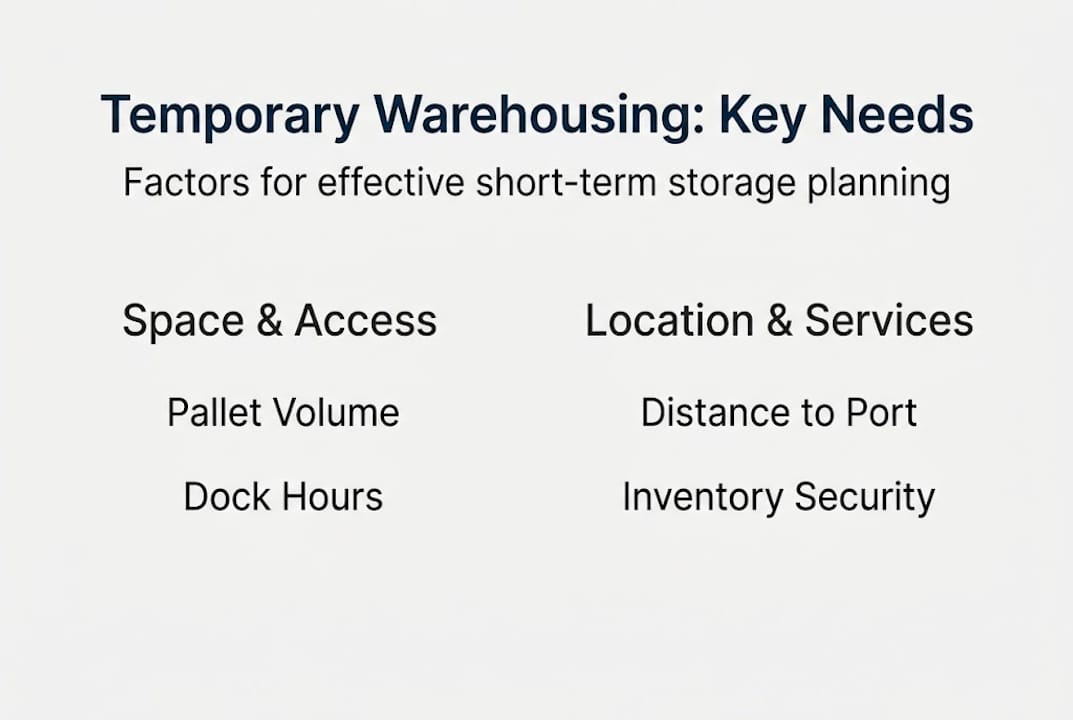
| Need | Question to answer |
|---|---|
| Space volume | How many pallets at peak? |
| Duration | Weeks, months, or seasonal? |
| Services | Cross-dock, pick-pack, devanning? |
| Access | 24/7, secure, port-adjacent? |
| Flexibility | Can you scale up or down mid-contract? |
Also confirm your access requirements. Do your drivers need 24/7 dock access? Do you need a secure yard for high-value cargo? These details narrow your provider options quickly.
Pro Tip: Always build in a 15 to 20% buffer above your forecasted pallet count. Demand spikes rarely follow a clean schedule, and running out of space mid-season is far more expensive than reserving a little extra room upfront.
Selecting the right service provider
With your needs defined, the next step is finding a warehousing partner who can actually deliver. Not every 3PL is built for short-term, high-volume engagements. You need one that specializes in flexibility.
Start with a short list of providers in your target region. For South Florida operations, focus on facilities in the Medley and Doral corridor, which sits at the center of the region's freight network. Proximity to the Florida Turnpike, MIA cargo terminals, and PortMiami should be non-negotiable criteria.
Here's a side-by-side comparison of what to look for:
| Criteria | What to look for | Red flags |
|---|---|---|
| Location | Near ports, highways, airports | Far from freight corridors |
| Service range | Cross-dock, devanning, pick-pack | Storage-only options |
| Flexibility | Month-to-month or short-term terms | Long-term lease requirements |
| Technology | Real-time inventory visibility | Manual tracking only |
| Pricing | Flat rates, no hidden fees | Vague or bundled billing |
| Compliance | Insured, licensed, bonded | No documentation available |
3PL providers can offer scalable and flexible space during short-term peaks, which is exactly what you need when demand is unpredictable. A good partner adjusts with you, not against you.
When evaluating providers, work through this checklist:
- Confirm the facility is insured and compliant with local and federal regulations
- Ask for references from clients with similar volume and service needs
- Request a facility tour before signing anything
- Review the contract for exit clauses and volume adjustment terms
- Verify that billing is itemized and transparent with no surprise charges
- Ask about their peak-season capacity limits so you know their ceiling
Don't overlook technology. A provider without real-time inventory reporting creates blind spots in your supply chain. You need to know what's in the warehouse, what's moving, and what's sitting, at any moment.
Pro Tip: Ask every provider how they handle tech integration. Can they connect with your WMS or ERP? If the answer is vague, that's a signal their reporting capabilities may not meet your operational needs.
Setting up efficient operations and workflows
Once your provider is chosen, speed and clarity matter. The faster you establish clean workflows, the sooner your temporary warehousing starts performing at full capacity.
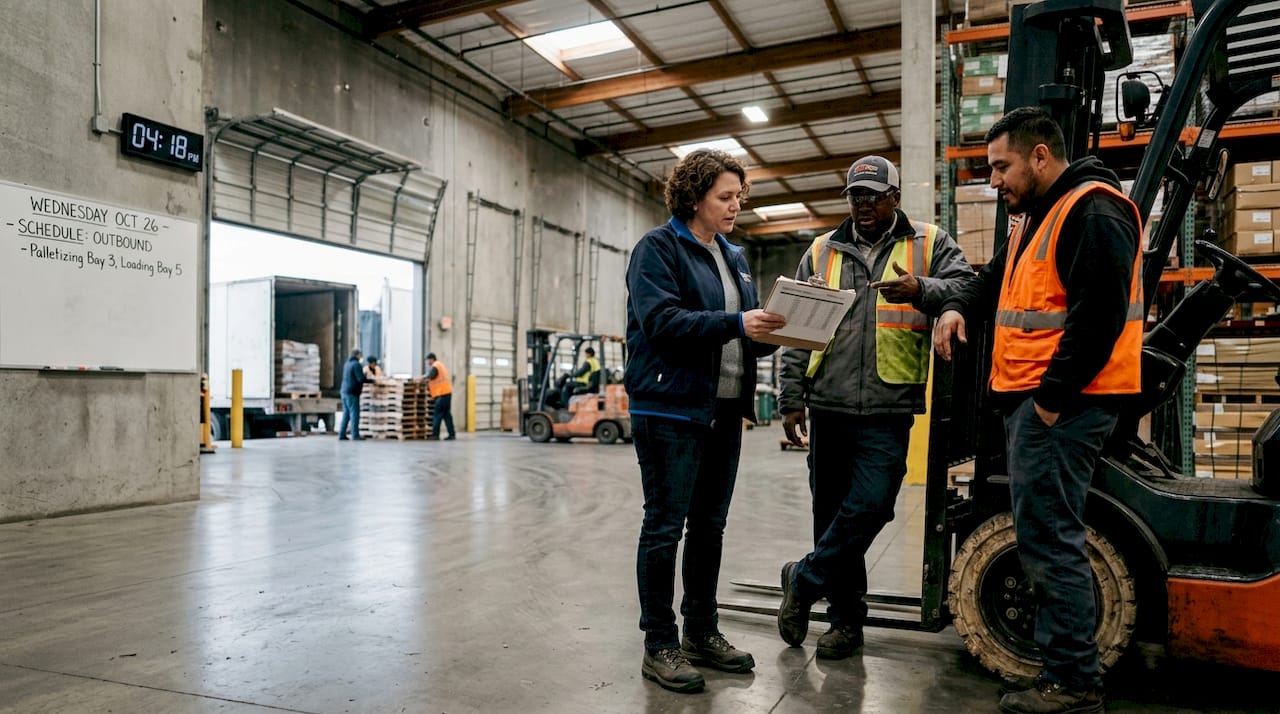
Begin with system integration. Your inventory management system needs to talk to your provider's warehouse management system. Even a basic data feed covering inbound receipts, storage locations, and outbound shipments prevents the most common errors: lost inventory, duplicate orders, and billing disputes.
Follow these steps to get operations running quickly:
- Share your item catalog, SKU list, and packaging specs with the warehouse team before the first shipment arrives
- Define receiving windows. Confirm what days and hours inbound freight will arrive and who signs off on receipt
- Set up storage zones by product type, velocity, or fulfillment priority
- Standardize pick-and-pack instructions in writing so there's no ambiguity for warehouse staff
- Confirm outbound cutoff times to ensure same-day or next-day shipping windows are met
- Establish a single point of contact on both sides for daily communication
Workflow clarity also reduces errors during high-volume periods. Cross-docking is one area where this matters most. When freight is moving from inbound to outbound in hours, not days, every step needs to be defined in advance.
Common workflow elements to standardize:
- Inbound check-in process and damage documentation
- Pallet labeling and location assignment
- Order release and pick confirmation
- Carrier scheduling and dock assignment
- Exception handling for damaged or short-shipped freight
Critical note: Confirm your inbound and outbound windows in writing before operations begin. Unplanned arrivals and late carrier pickups are the top causes of dock congestion and overtime charges during peak periods.
Efficient workflow setup minimizes delays and prevents costly errors during warehousing transitions, especially when you're managing multiple SKUs across tight fulfillment windows.
Monitoring performance and troubleshooting common pitfalls
With operations running, your job shifts to keeping them on track. Temporary warehousing arrangements can drift quickly if no one is watching the right numbers.
Focus on these core KPIs from day one:
| KPI | Why it matters | Target benchmark |
|---|---|---|
| Order accuracy rate | Prevents returns and chargebacks | 99%+ |
| Inbound lead time | Tracks receiving speed | Under 24 hours |
| Space utilization | Avoids overpaying for unused space | 80 to 90% |
| Outbound on-time rate | Ensures SLA compliance | 98%+ |
| Billing accuracy | Catches unauthorized charges | 100% match |
Real-time monitoring and fast problem resolution are critical for temporary logistics success. When something goes wrong, catching it in hours rather than days is the difference between a minor fix and a major disruption.
The most common pitfalls in temporary warehousing include:
- Lost or misplaced inventory: Usually caused by inconsistent labeling or poor location assignment
- Shipment delays: Often tied to unclear outbound windows or carrier scheduling gaps
- Overbilling: Happens when storage days are miscounted or accessorial charges aren't pre-agreed
- SLA misses: Typically result from understaffed receiving or picking during volume spikes
- Communication breakdowns: When there's no single point of contact and issues fall through the cracks
Set formal checkpoints at the one-week, two-week, and monthly marks. Review your KPIs, walk through any open issues, and adjust workflows as needed. Don't wait for problems to escalate.
Pro Tip: Schedule a brief daily check-in with your warehouse contact during the first two weeks of operations. It takes 10 minutes and catches small issues before they become expensive ones.
Why most brands underestimate the value of flexible warehousing
Here's something most logistics articles won't say directly: most brands treat temporary warehousing as a last resort. They call a 3PL when they're already overwhelmed, already behind, and already losing money. That's the wrong approach.
The brands that consistently outperform their competitors during peak seasons treat flexible warehousing as a strategic asset, not an emergency tool. They pre-negotiate short-term capacity before demand spikes. They know their provider's capabilities before they need them. They build buffer space into their planning, not their panic.
Consider a mid-size e-commerce brand importing seasonal goods through PortMiami. By securing temporary pallet storage in Medley six weeks before peak, they were able to stage inventory closer to their final-mile carriers, cut delivery lead times by two days, and avoid the premium rates that come with last-minute 3PL arrangements. That proactive move translated directly into better customer reviews and repeat orders.
Flexible warehousing solutions also give you negotiating leverage. When you're not desperate, you get better rates and better terms. The brands that build this into their annual logistics planning don't just survive peak season. They grow through it.
How 3PL Prime can support your peak warehousing needs
Having unpacked best practices and strategies, the next step is finding the right partner to put them into action.
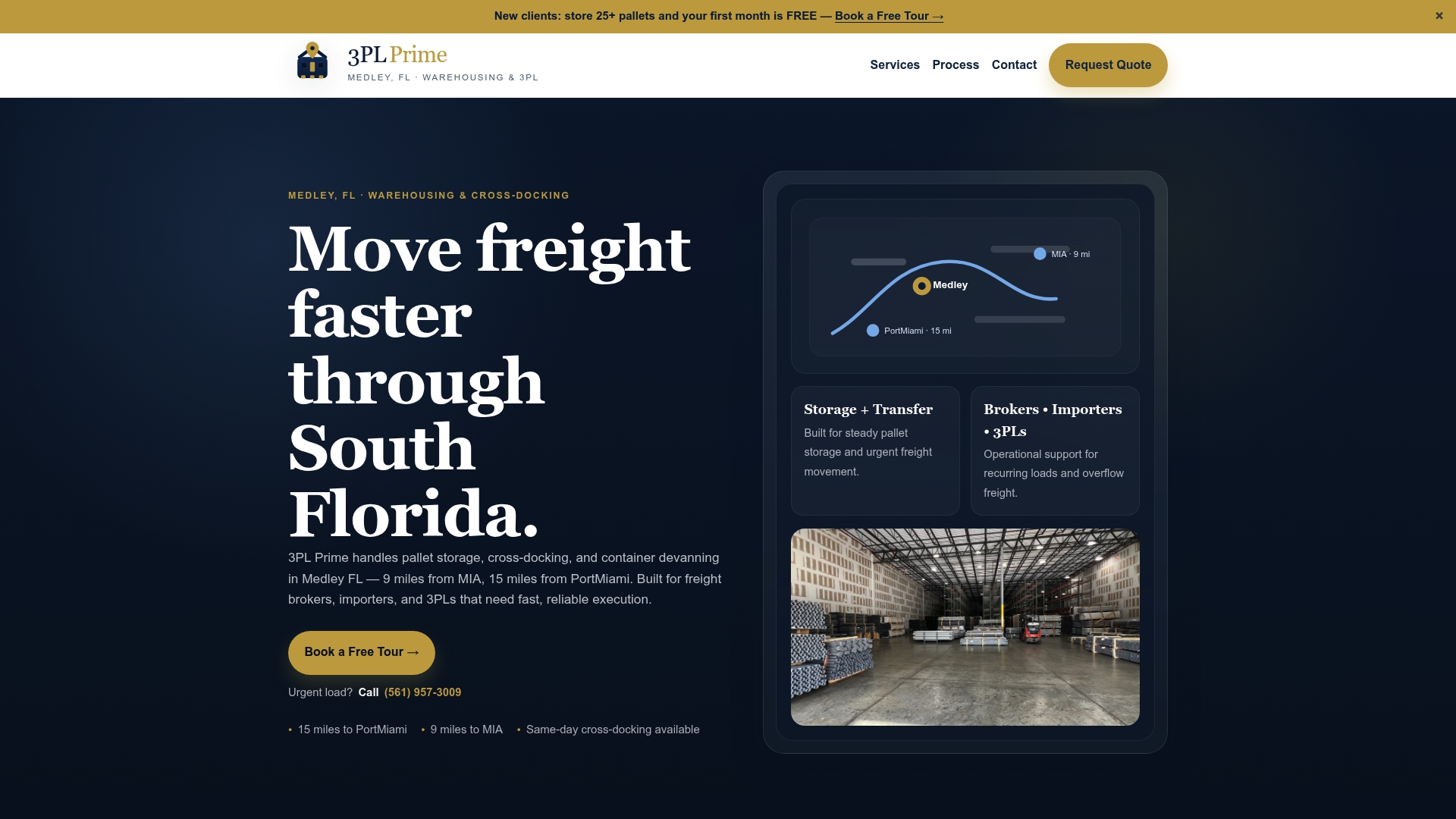
At 3PL Prime, we work with e-commerce brands, importers, and freight brokers across South Florida who need flexible, reliable warehousing without long-term commitments. Our Class A Prologis facility in Medley, FL sits 9 miles from MIA cargo terminals and 15 miles from PortMiami, with direct Florida Turnpike access for fast regional distribution. We offer pallet storage from $20/pallet/month, same-day cross-docking, container devanning, and no setup fees. New clients storing 25 or more pallets get their first month free. Connect with our Medley FL warehousing experts to get a custom quote or book a free facility tour at 3plprime.com or call (561) 957-3009.
Frequently asked questions
What is temporary warehousing and when should I consider it?
Temporary warehousing provides short-term storage and logistics support during peak seasons, inventory overflow, or facility transitions. It's worth considering any time your current space can't keep up with inbound volume or fulfillment demand.
How do I calculate how much space I need for temporary warehousing?
Review your historical order volumes, map out expected inbound and outbound shipments, and add a 15 to 20% buffer for unexpected surges. E-commerce and import surges can spike quickly, so conservative estimates tend to cost less than scrambling for last-minute capacity.
What are the most important criteria for selecting a temporary warehousing partner?
Prioritize location, service range, pricing transparency, technology capabilities, and contract flexibility. Scalable 3PL providers that offer month-to-month terms are especially valuable when your volume is unpredictable.
How do I avoid common mistakes in managing temporary warehousing?
Set up real-time inventory tracking from day one, define SLAs in your contract, and hold regular performance reviews with your provider. Catching issues early prevents delays and billing disputes from compounding.
Can temporary warehousing help reduce costs?
Yes. Short-term storage arrangements prevent you from over-committing to long-term leases you don't need year-round. They also reduce the risk of stockouts and late delivery penalties that come with peak-season surges and inadequate capacity planning.